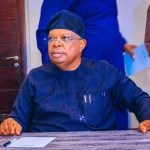
The Managing Director, Lekki Free Zone Development Company (LFZDC), Mr. Dai Shunfa, has beckoned on investors – local and international – to take advantage of the conducive industrial environment available at the Lekki Free Trade Zone.
Sitting on over 3,000 hectares of land and boasting of necessary infrastructure, including a 32-kilometre access road, uninterrupted power supply guaranteed by a 24-megawatt independent gas plant, as well as 3,000 tons of daily water supply, the management described the zone as an industrial haven.
According to the M.D., with all the latest infrastructure in place, the zone is developing very fast.
“We also have all the relevant government agencies in the zone such as Immigration, Customs, DSS, and the police. They provide 24-hour services for all the enterprises operating inside the zone. As a zone operator, we also invest a lot in infrastructure such as the power plant, the transmission line, water plant, and the road network.
“So, we are trying to create the best infrastructure for all the international and local investors. With the help of the Lekki Deep Seaport, the coastal highway, and all the latest infrastructure in this area, the zone is developing very fast. For example, this year, from January up to now, we sold more than 110 hectares of land to 16 flagship customers.”
Although more than 130 enterprises registered with the company and about 67 of them are yet to take up fully, and only about 500 hectares of land out of 3,000 have been developed, the management said patronage is not enough yet, and as such, more investors are expected on board.
“Definitely, it is not enough. Like in the pre-trade zone, we own 3,000 hectares of land. Up to now, we have only developed 500 hectares. So, we still have a lot of land that needs to be developed.”
However, a recent tour of the facility by journalists organised by the Embassy of the People’s Republic of Nigeria showed an industrial hub with immense benefits to investors. Also, the two-kilometre proximity to the Lekki Deep Seaport makes import and export seamless for investors.
He recalled the absence of the Deep Seaport and poor road infrastructure about five years ago and concluded that “infrastructure was a bottleneck for the zone to attract any new investments.”
So, in spite of the need for greater investment in the zone, the M.D. is nevertheless elated that currently, the zone has grown to become a one-stop service for present and future investors.
“So, this record surpassed all the records we achieved in the past seven years. But that is not the end; we are still trying our best; we are still trying to improve our infrastructure. We are still trying to bring more investment into the zone,” Shunfa said.
But despite the numerous efforts made at wooing investors, Shunfa expressed worries over negative news about Nigeria, stressing that rumours about terrorism and kidnapping have kept potential investors away from the country.
“I think the most serious challenge we are facing towards attracting new investments is rumours and negative news about Nigeria. In the world outside Nigeria, people believe that kidnappings and killings occur every day here. This kind of rumour has left a very bad image for all the customers outside Nigeria.
“So, whenever we are trying to market the free zone in Asia and African countries, people are afraid to come and invest here. That is the reason I am very happy to see all of you here because we need to voice out that Nigeria is safe, Lagos State is safe, and the zone is safe.
“I have been here for almost 20 years. Every country has its peculiar problems. There is insecurity in every part of the world, and Nigeria is not different,” he added.
The M.D. listed other challenges to include the effect of the newly enacted Tax Reform Act, preferential policies, and lack of tax incentives from other African countries. He therefore sought the support of the Federal Government to ensure smooth export of goods, not only to African countries but other parts of the world.
“I believe the government’s purpose for pushing out the new tax reform is to generate more income and encourage the free zone enterprises to export more and more of their products out of Nigeria rather than depend solely on the domestic market. But actually, there are lots of challenges about the free zone incentives.
“Most of the preferential policies have been affected. Consequently, most of the free zone enterprises are selling their products to the domestic market, although it is also very helpful to the economy and to society because they are selling high-quality products at a reduced price, which are beneficial to our people.
“Another challenge has to do with the difficulty encountered by most of the enterprises in exporting their goods. We need the government’s support in securing tax incentives from ECOWAS countries. Currently, most of the free zone enterprises are not entitled to ECOWAS tax incentives.”