The Joint United Nations Programme on HIV/AIDS (UNAIDS) has estimated that the distribution of condoms for prevention of the disease in Nigeria has fallen by 55 per cent from last December to March this year.
The figure, released Tuesday in UNAIDS’ 2025 World AIDS Day report, Overcoming Disruption, Transforming the AIDS Response, shows what the agency described as widespread disruptions to prevention, testing, and community-based programmes across dozens of countries.
An uncountable number of extra people have died from AIDS, and 2.5 million have lost access to medicine to block the spread of HIV, because of cuts to global programmes since Donald Trump returned to the White House.
“Persistent funding shortfalls and the perilous risks facing the global HIV response are having profound, lasting effects on the health and well-being of millions of people throughout the world,” said a report by UNAIDS.
For nations like Nigeria, where donor support is critical to sustaining prevention infrastructure, the impact has been “immediate and severe,” the report noted.
The report said UNAIDS’ community partners had reported deaths of people living with HIV due to the shuttering of local clinics and treatment, although the exact number of additional deaths remains unclear, as data collection was still ongoing.
The global AIDS response entered “crisis mode” when the largest donor, the United States, which accounted for 75% of international HIV funding, temporarily halted all HIV-related funding earlier in the year, UNAIDS said.
Other donor countries have also dramatically scaled back foreign aid programmes this year, including European countries pressed by Trump to ramp up spending on defence instead.
Though some HIV programmes have since resumed with funds from a U.S. programme known as PEPFAR, the President’s Emergency Plan for AIDS Relief, overall funding continues to decline, jeopardising 2030 targets to end AIDS as a public health threat, UNAIDS said.
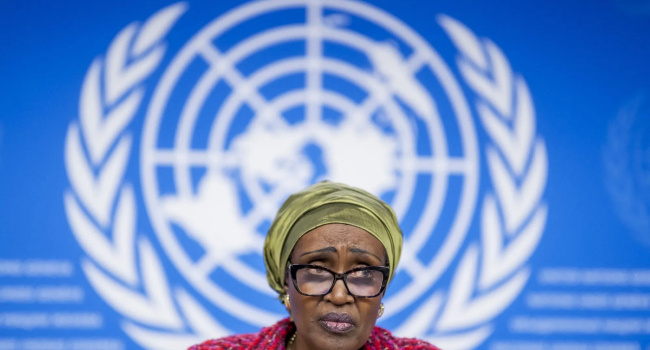
UNAIDS Executive Director Winnie Byanyima told reporters in Geneva that her agency was working with at least 30 countries to improve domestic financing to move away from dependency on international donors. But she said the funding gap could not be closed immediately, and major challenges remain.
The U.N. agency said 40.8 million people are living with HIV, with 1.3 million new infections reported in 2024.
The innovation could reduce the need for cadavers and animals in medical training and testing.
It is estimated that 2.5 million people had lost access to the PrEP preventive HIV medication as of October 2025 due to donor funding cuts. Byanyima said the distribution of preventive HIV medicines had fallen by 31% in Uganda, 21% in Vietnam, and 64% in Burundi.
A survey conducted this year by UNAIDS and women’s rights group the ATHENA Network found that nearly half of women and adolescent girls reported disruptions to HIV prevention and treatment services in their communities.
Globally, about 39% fewer people acquired HIV in 2023 compared with 2010, with sub-Saharan Africa achieving the steepest reduction (−56%).
Nonetheless, an estimated 1.3 million [1.0 million–1.7 million] people acquired HIV in 2023—over three times more than the target of 370,000 or fewer new infections in 2025.
“Condom use remains the most effective low-cost HIV prevention method, but condom programmes have been defunded and social marketing schemes cut back in many countries. Household survey data suggest condom use has declined in recent years, including among young people aged 15–24 years, and it is highly infrequent during sex with non-regular partners.
“About 36% of adults in eastern and southern Africa and 25% in western and central Africa used a condom at last sex.”
A widening funding gap is holding back the HIV response.
Approximately US$19.8 billion (2019 United States dollars) was available in 2023 for HIV programmes in low- and middle-income countries—almost US$9.5 billion short of the amount needed in 2025.
Total resources available for HIV, adjusted for inflation, are at their lowest level in over a decade.
The regions with the biggest funding gaps—Eastern Europe, Central Asia, and the Middle East and North Africa—are making the least headway against their HIV epidemics.
Most funding for HIV comes from domestic resources (about 59%), but both international and domestic HIV funding are under stress.
Adjusted for inflation, domestic HIV funding declined in 2023 for the fourth year in a row, and international resources were almost 20% lower than at their peak in 2013.
Financing support from bilateral donors has dwindled dramatically. The overall reductions in external HIV resources would be much steeper were it not for sustained and high levels of funding from the Global Fund to Fight AIDS, Tuberculosis, and Malaria and the United States Government.
“Development assistance for HIV will continue to be crucial. The continued underfunding of HIV prevention, societal enabler programmes, and community-led activities does not bode well for the HIV response.
“Interventions for people from key populations are especially neglected, even in regions where the vast majority of new HIV infections occur in people from these populations.
“An estimated US$1.8 billion–2.4 billion was available for primary prevention programmes in low- and middle-income countries in 2023, compared with the US$9.5 billion that will be needed in 2025”, USAID said.
UNAIDS urged world leaders to reaffirm political and financial commitments to ending AIDS, citing pledges made during the recent G20 summit in South Africa.
The agency also called for increased investment in innovations, including affordable long-acting prevention methods, and renewed protection of human rights and community-led initiatives, which it argues remain central to any effective HIV response.