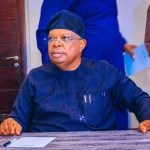
The Petroleum Industry Act was passed in order to address the issues plaguing the oil and gas industry, according to Chief Timipre Sylva, Minister of State Petroleum Resources (PIA).
Speaking on Wednesday at the Nigeria International Economic Partnership Forum in New York with the theme “Nigeria’s Oil and Gas Sector: Reforms, Results, and the Road Ahead,” Sylva said the government of President Muhammadu Buhari made proactive reforms in the sector a priority because it wanted to breathe new life into the sector, which had previously been plagued by financial and operational difficulties.
The Petroleum Industry Act (PIApassage )’s on August 16, 2022, was described by the minister as a “watershed moment for the nation, the industry, and all stakeholders alike, signaling the beginning of a more conducive environment for investment, output, industrial and national growth, while also addressing legitimate grievances of resource host-communities most impacted by resource extraction operations.”
Sylva said the “PIA 2021, at full implementation, will create massive investment opportunities, improve transparency, attract investors, and reposition the Nigerian Oil and Gas industry for sustainable growth,” urging investors “to capitalize on the sustainable incentives provided by the PIA 2021 to invest in the oil and gas industry in Nigeria” with no future regret.
The minister told the gathering that the “PIA 2021 has established a legal, governance, regulatory, and fiscal framework for the petroleum industry, host community development, and associated matters” adding that “it provides fiscal certainty, improves regulations and incentives for investment, including up to ten-year tax vacations, while guaranteeing better take for both government and private investors, thereby balancing rewards with risk”.
The minister who said the PIA has set the foundation for a sustainable growth in the sector with the establishment of the Nigerian National Petroleum Company Limited (NNPCL), Nigerian Midstream and Downstream Petroleum Regulatory Authority (NMDPRA) and Nigerian Upstream Petroleum Regulatory Commission (NUPRC) reassured the international investors of government’s commitment in the sector.
“This administration remains committed to ensure a full implementation of these carefully conceived reforms to foster efficiency and attract investments and development of supporting infrastructure along the oil and gas value chain as embedded in our policy aspirations for the sector.
“The government has taken the necessary steps to sustainably implement and operationalize the PIA 2021 within the timelines stipulated in the Act. To this end, the government has inaugurated the steering committee, which I chair, responsible for PIA implementation immediately after the PIA was signed into law,” he further stated.
He noted that the commitment of the Nigerian government to tackle the challenges in the oil and gas sector is a clear move “to reform the industry in order to build a robust, thriving and resilient economic backbone for domestic growth, expansion and consolidation in the era of the global energy transition, and also in a post covid world”.
Sylva said in his reflections on the conference’s theme, “Nigeria’s Oil and Gas Sector: Reforms, Results and the Road Ahead,” that it echoes the goals and commitment of President Buhari’s administration to reform the industry in order to make it a pivot for industrial diversification, economic growth, and sustainable development in Nigeria.