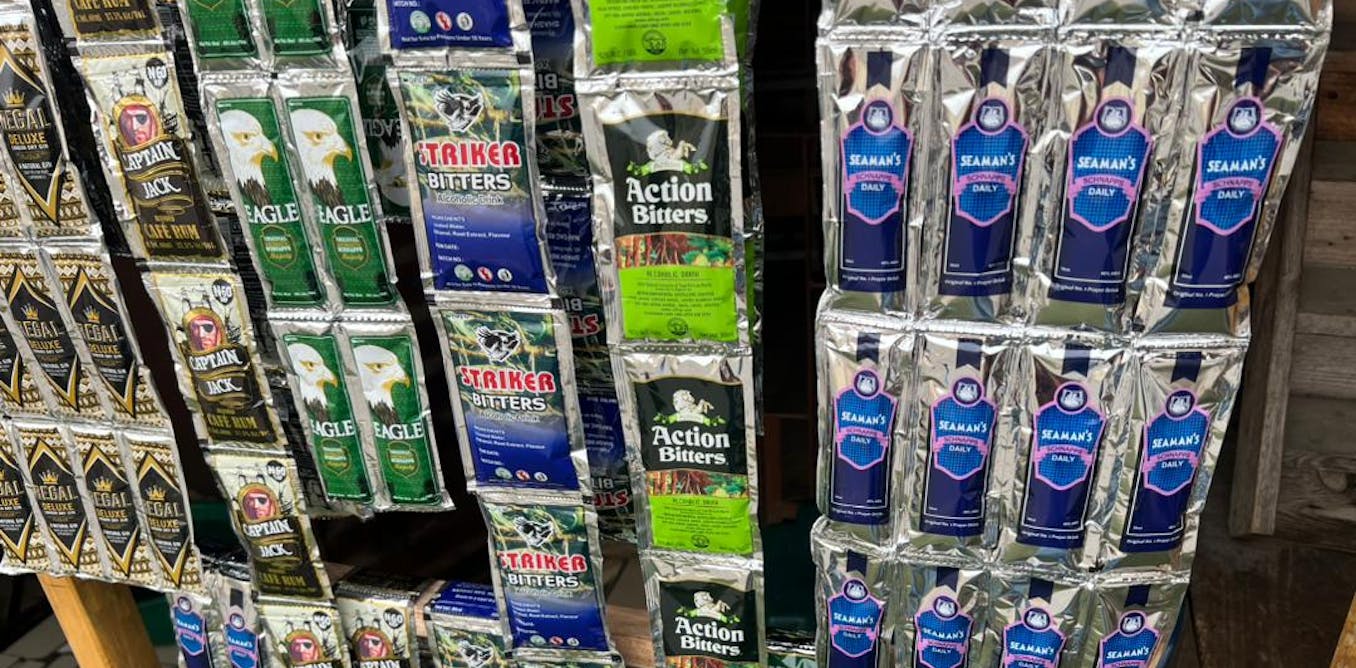
Since the idea of banning alcoholic drinks in sachets and small bottles in Nigeria was first mooted, certain Nigerians have not been comfortable with the idea.
The idea was first mentioned in 2018 but due to the public outcry then, the Federal Ministry of Health, Federal Competition and Consumer Protection Commission, FCCPC, National Agency for Food and Drug Administration and Control, NAFDAC, and bodies like the Association of Food, Beverages and Tobacco Employers (AFBTE), came together and agreed to sign a five-year memorandum of understanding (MoU) to gradually phase out sachet and small-bottle alcoholic drinks.
Ever since then, the government has shifted the implementation a couple of times.
However, following the latest moves, reactions have continued to trail the idea.
First, it was alleged that the manufacturers of these categories of drinks went into an intense lobby to ensure that the idea was buried but that didn’t happen as it kept coming on and on.
What the manufacturers have been able to do was to have delayed the full implementation of the policy.
However, last week, specifically on Tuesday, November 5, the Senate ordered NAFDAC not to extend the December 31 implementation deadline for the production of alcohol in sachets and small bottles.
The resolution followed a motion of urgent national importance sponsored by Senator Asuquo Ekpenyong representing Cross River South at plenary session on Tuesday last week.
Presenting the motion, Ekpenyong said the directive was in line with global regulatory standards and international best practices aimed at reducing alcohol-related harm among Nigerians.
He recalled that in 2018, the Federal Ministry of Health, Federal Competition and Consumer Protection Commission (FCCPC), NAFDAC and industry’s bodies, including the Association of Food, Beverages and Tobacco Employers (AFBTE) voluntarily signed a five-year memorandum of understanding (MoU) to gradually phase out sachet and small-bottle alcoholic drinks.
Ekpenyong explained that the Federal Government, upon appeals from manufacturers, had already granted a one-year moratorium in 2024 to enable producers to exhaust the existing stock and transition to compliant packaging alternatives.
However, the lawmaker expressed concern that some manufacturers were lobbying for another extension, which he said, would undermine regulatory authority, endanger public health and perpetuate the circulation of harmful alcoholic products in the market.
“As the December 2025 deadline approaches, certain manufacturers are lobbying for another extension, thereby undermining the regulatory process and jeopardising public health.
“We cannot continue to expose our youths to cheap, easily accessible alcohol that destroys lives and endangers public safety,” Ekpenyong said.
He warned that the continued availability of high-strength alcoholic beverages in sachet form has contributed to addiction, impaired cognitive development, school dropouts, domestic violence and increased road accidents, particularly among commercial drivers and young people.
Ekpenyong further noted that manufacturers who had complied in good faith were now at a disadvantage against those who have continued to produce the non-compliant products, creating an uneven market.
Following extensive deliberation, lawmakers who contributed to the motion commended Ekpenyong for raising the issue, stressing the need for stricter enforcement and public sensitisation.
Senator Anthony Ani, representing Ebonyi South, backed the call, describing the easy availability of cheap alcohol as a growing social menace.
“The easy availability of cheap alcohol is fuelling social vices. We must act now to save our young generation from self-destruction,” he said.
In his ruling, Senate President Godswill Akpabio described the resolution as a timely step toward safeguarding public health and youth welfare.
He urged NAFDAC to ensure full enforcement of the ban by December 2025, warning that any further extension would undermine Nigeria’s anti-substance abuse efforts.
“This is a matter of urgency,” Akpabio said. “The agency must act decisively to protect Nigerians, especially our young people, from the dangers of unregulated alcohol consumption.
Following the Senate resolution and subsequent directive to NAFDAC, the agency on Tuesday, November 11, reiterated its resolve to commence the enforcement of the ban on production and sale of alcoholic beverages in sachets and small-volume bottles next month.
The information was contained in a statement by the Director-General of NAFDAC, Prof. Mojisola Adeyeye, in Abuja, recently.
She said the decisive action was ordered by the Nigerian Senate and backed by the Federal Ministry of Health and Social Welfare, hence it underscored the agency’s statutory mandate to safeguard public health and protect vulnerable populations, particularly children, adolescents, and young adults from the harmful use of alcohol.
She added that the proliferation of high alcohol content beverages in sachets and small containers has made such products easily accessible, affordable, and concealable, leading to widespread misuse and addiction among minors and commercial drivers.
“This is a public health menace, and it has been linked to increased incidences of domestic violence, road accidents, school dropouts, and social vices across communities.
“This ban is not punitive but protective. It is aimed at safeguarding the health and future of our children and youth.
“The decision is rooted in scientific evidence and public health considerations. We cannot continue to sacrifice the well-being of Nigerians for short-term economic gain. The health of a nation is its true wealth,” she said.
She reiterated that only two categories of alcoholic beverages were affected by the regulation, namely, spirit drinks packaged in sachets and small-volume pet/glass bottles below 200ml.
She called on all stakeholders, including manufacturers, distributors and retailers, to comply fully with the phase out deadline, as no further extension would be entertained beyond December 2025.
DAILY POST recalls that in December 2018, NAFDAC, the Federal Ministry of Health, and the FCCPC signed a five-year Memorandum of Understanding (MoU) with the Association of Food, Beverage and Tobacco Employers (AFBTE) and the Distillers and Blenders Association of Nigeria (DIBAN) to phase out sachet and small-volume alcohol packaging by January 31, 2024.
The moratorium was later extended to December 2025 to allow industry operators to exhaust old stock and reconfigure production lines.
NAFDAC, however, emphasized that the current Senate resolution aligns with the spirit and letter of that agreement and with Nigeria’s commitment to the World Health Organization’s Global Strategy to Reduce the Harmful Use of Alcohol (WHA63.13, 2010), to which Nigeria is a signatory.
As it stands now, the position of the Federal Government, NAFDAC and the Senate, as well as some Nigerians are well known on the matter and that is that the production of hot drinks in sachets and small bottles predisposes hundreds of thousands of young Nigerians to over-consumption of the substance which has been identified to be responsible for sundry health issues, like kidney failure, high blood pressure and other heart related health challenges.
However, some other Nigerians, particularly the manufacturers, wholesalers and retailers see the move as antithetical to the growth of their business.
In fact, they see it as an attack on their means of livelihood.
One of those who hold this argument is a business woman, Mrs Bukola Jaiyeloba, who deals in these categories of goods.
She said the ban would definitely affect her business and appealed to the government to rescind the decision.
“These people don’t consider the common man at all. Those who started the production of these sachets and small bottle hot drinks were only thinking of the ordinary man, who also deserves to be happy.
“They know that it is not everybody that can afford to buy a big bottle of hot drink and that is why they decided to produce the sachet and small bottles so that even the poor can also have access to it and keep boy and soul happy.
“But with this new law now, this category of Nigerians will no longer be able to afford the drinks and that won’t be good for the nation. It could push many of them to take drugs, which is another big problem for the country.
“For us who are into the business, our business will equally shake. If care is not taken, many people will be out of business because these are the products that everyone can afford and we sell them like groundnuts, making our profits and contributing to our family upkeep.
“So, we just plead that the government should reconsider this move and allow the poor person to breathe in this country,” she said.
Apart from those who manufacture or sell the product, the consumers, the majority of whom are the downtrodden, are also lamenting that the government is about to take away their joy.
At Mile 2 drinking spot in Lagos, where consumers of these products gather in the morning and evening to patronize these brands of drink, one of the consumers told DAILY POST that the problem with the Nigerian government is that they are always chasing shadows.
He wondered why the government is interested in taking away the only thing that makes millions of young Nigerians happy when drugs that destroy lives in their numbers are allowed to be sold and consumed even in public.
“How can anybody think of this kind of policy? If they say it is causing health problems and that is why they are being banned, is it not the same thing that is in the big bottles?
“They are only going to make things difficult for us but we must find a way around it. We can pull resources together to buy the bottle and use a small cup to share among ourselves; just that it won’t be easy for us.
“Why is the government after those that take hot drinks but allow the youths to waste their lives on hard drugs? They will tell you that they are fighting drug peddlers but that is not true.
“Drugs like Marijuana, colos and others are no longer hidden. Both the sellers and consumers no longer hide it. In fact, people smoke marijuana on the street of Lagos in broad daylight and the security agents will see them and do nothing, but it is a sachet and small bottle of hot drinks that they want to ban so that our joy will be taken away.
“Well, all I know is that the poor will always find a way of making life worth living, no matter what the rich do.
“This policy will not break us, it would rather strengthen us to find alternatives to our joy.
“Some people have been begging but it seems they are bent on doing their worst. All I know is that life must continue and we will always find a way around it,” he stated.