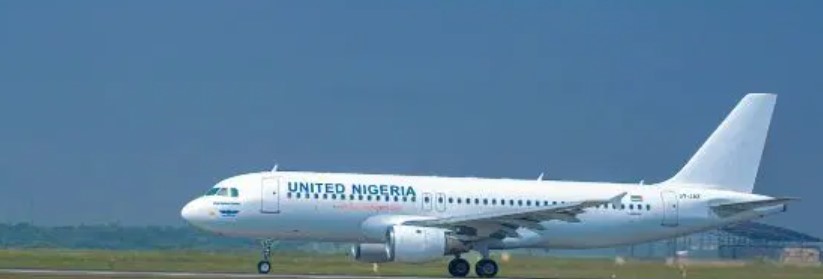
On Monday, United Nigeria Airlines expanded its operations to Accra, Ghana, in a unique style. It was a momentous occasion that showcased Africa’s cultural richness and paid tribute to one of the continent’s most influential figures.
At the Nnamdi Azikiwe International Airport in Abuja, a vibrant cultural troupe was on hand to launch the maiden flight, leaving everyone in awe. At the Kotoka International Airport, another energetic troupe of Ghanaian men and women, dressed in colourful traditional attire, entertained the guests with lively performances.
What’s more, the aircraft was named after the late Ghanaian President, Jerry Rawlings, reminding all present that his place in Africa history is sealed.
After the flight, United Nigeria Airlines founder, Professor Obiora Okonkwo, spoke to a select group of journalists on how the carrier intends to sustain the route and challenges confronting airline operations in Nigeria, among other interesting issues. Excerpts
You have just activated the Accra route. What is your competitive edge and strategy to remain sustainable in this highly saturated market?
Passengers can only buy tickets from airlines that are available. We have not been available in the market, so we could not have competed. Now, we are in the market, our first strategy is promotion, letting people know that we are here with an exceptional service to offer. Our CRJ-900 for that route is a beautiful aircraft. The aircraft is like a genius, the configuration is great, the interior is marvelous, it is very suitable for this kind of operational flight, it has a passenger capacity of 90. So, if we have an adequate and a reasonable number of passengers to fly there, that aircraft will be dedicated on that route. We also have ERJ-145 to compete. Pretty much, we are offering the passengers not only apple to apple, but also what is bigger and better than apple. That is one way to tell you that we are ready and we are prepared. In terms of the saturation of the market, at least from available data, out of the whole region of West Africa, traffic from Nigeria to Accra is more than all the other regional flights. I mean the whole traffic from Nigeria to other regions. 50 per cent of the traffic is between Nigeria and Accra. So, it is still a place to compete. In other words, we have to be as reasonable and fair as possible with our pricing and costing. Above all that, we will do more than the passengers’ expectations. Every passenger will want to have a convenient schedule, and then with that convenient schedule, will want to get there on time. If you look at our records at United Nigeria, our on-time departure is almost 98 per cent, if not more. There is no record that is better than that. Those things we have developed out of our experiences in the domestic market, we will take them to the regional.
On the regional route, the Federal Airports Authority of Nigeria, FAAN, gets about $80 as passenger service charge. The NCAA gets $20 as security levy. That is apart from the five per cent ticket sales charge that still goes to NCAA which will now be disbursed among five other aviation agencies. This issue of tax or levy has really denied a lot of people air travel. With these charges and the heavy competition that is expected on that route, how do you intend to sustain this route?