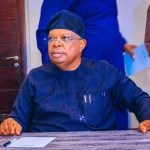
Minister of state for Petroleum Resources, Timipre Sylva has said that an annual investment of around $35 billion could bring electricity access to 759 million Africans who currently lack it.
The minister also added that another $25 billion a year can help 2.6 billion people globally access clean cooking by 2030.
Sylva said these at the annual Symposium and Exhibition of the Society of Petroleum Engineers (SPE), Tuesday in Lagos. He was represented by his technical adviser, Gas and Business, Justice Derefaka.
UNECA in a report noted that Africa needs about $40 billion worth of investments every year if it is to meet its energy needs.
“Everyone in the world could have access to clean, affordable energy within the next nine – ten years if countries modestly increase investments and this is according to UN’s Department of Economic and Social Affairs.
“A major question that is yet to be answered is whether Africa will benefit from an equitable share in this global investment and growth or, will continue to fall further behind global standards as encapsulated in the UN’s 17-SDGs.
“Despite the long-term and required drop in demand for fossil fuels, short-term demand and prices remain robust, providing strong commercial justification for their extraction and a need to smooth the transition,” Sylva noted.
Sylva said the required investment represents only a small fraction of the multi-trillion-dollar global energy investment needed overall.
He noted that despite contributing less than six per cent of world energy consumption and two per cent of total global emissions, there is need for the continent to shift to cleaner energy use.
With significantly untapped fossil fuel reserves, which could provide much-needed foreign direct investment and export revenue, Sylva said Africa has the ability to play a leading role and SHOULD play a leading role in the transition to a net-zero energy future. According to him, the continents enormous resources can be harnessed using clean energy technologies.
However, the minister stressed that with “approximately 208.62 trillion cubic feet (TCF) of proven gas valued at over $803.9 trillion and potential upside of 600TCF of gas, the most extensive in Africa, and in the top 10 globally.
“And in line with federal government declaration of years 2021 – 2030 as the ‘Decade of Gas’, we are taking steps to expand and develop the nation’s huge gas resources through enhanced gas exploration, development and utilisation schemes which will lead to gas reserves growth, increased gas production, maturation of the domestic and export gas market, as well as gas flare elimination,” he said.
Describing the PIA as a game changer, Sylva said the legislation will help support the continent to alleviate energy poverty.
He said: “The PIA has generous incentives to enable development, distribution, penetration, and utilisation of gas even as it incentivizes entry into the midstream, especially for pipelines with an additional 5-year tax holiday for investment in gas pipelines.
“The PIA is a supply-side enabler, capable of provoking and triggering commercial interests and investments in gas utilization as well as treating gas as a stand-alone commodity.”
“As a nation, we are following a transition pathway that combines technology, investment, business strategies, and government policy that will enable Nigeria to transition from its current energy system to a low-carbon energy system with natural gas playing a pivotal role over the next generation, roughly between now and 2060.