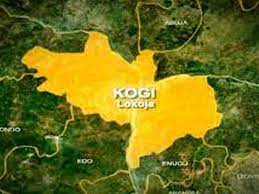
The House of Representatives has decried the attendant health hazards and implications arising from the activities of the mining companies in Awo, Olukwu, Okobo and Onupi communities in Kogi State.
The resolution of the House followed the adoption of a motion moved at the plenary yesterday by Hon. Abdullahi Halims.
Moving the motion, the lawmaker said exploration and mining of coal is being carried out by companies such as Dangote and Eta Zuma operating in 828 different locations including Awo, Olokwu, Okobo and Onupi communities in Ankpa Federal Constituency of Kogi State.
Halims noted that the provisions of Section 116 of the Nigeria Minerals and Mining Act, 2007 stipulated that Community Development Agreements must be signed by the mining companies granted operational licenses.
The lawmaker however expressed worry that mining companies operating in Ankpa Federal Constituency have not lived up to such agreements, thereby depriving such host communities of maximum benefits of exploration and mining of mineral deposits in such communities.
He said such deprivations are potential dangers capable of causing crises between host communities and companies operating in the area.
The House urged “the federal Ministry of Mines and Steel Development to ensure that the mining companies live up to environmental obligations and standards enshrined in Section 116 of the Nigeria Minerals and Mining Act, 2007.”
Studies examined the levels of some heavy metals in soils of Oke-Ere mining area in Yagba West, Kogi State, Nigeria, aim at ascertaining the degree of pollution, and risk pose to the environment, and human health to the residents in the area. A total of 48 soil samples were analysed by using Inductively Coupled Plasma Mass Spectroscopy (ICP-MS). The mean concentrations (mg/kg) were As(1.92), Cd(< 0.004), Co(29.8), Cr(117), Mo(4.00), Ni(51.4), Pb(24.1), Sc(17.8), Sn(21.9), and Zn(85.8). Principal component analysis revealed significant anthropogenic contributions of Sc, Cr, Ni, and as in soils.
The total hazard index (HI) of the metals for adult and children, indicates HI < 1 which connotes a non-carcinogenic health risk effect. The cancer risk (CR) value for ingestion and dermal exposure pathways was higher than the permissible limits (1 x 10⁻⁶ to 1 × 10⁻⁴), which indicated adverse health risk to the local resident. This study suggested adequate attention be directed to detailed risk assessment of heavy metals in the study area.