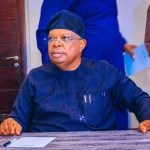
Amid the crisis rocking the National Hajj Commission (NAHCON), Chief of Staff to President Bola Tinubu, Femi Gbajabiamila and the Deputy Chief of Staff, Ibrahim Hadeija have called for reforms to address the issues of financial mismanagement, negligence and late preparation for pilgrimage.
The Presidency officials made the remarks during a fact-finding visit to NAHCON headquarters in Abuja on Wednesday.
The visit was part of their engagement with government agencies under the supervision of State House.
Addressing the challenges at NAHCON, Gbajabiamila said the Commission should not be found in any controversy, “because of its mandate and what it represents.”
“It’s a religious commission. It’s a commission that is set up to fulfill religious and spiritual obligations for men and women of faith.”
”So we are always surprised, even from the time when I was a Speaker, when issues that should never come up, arise in relation to this Commission,” he said.
Gbajabiamila, however, lamented that many times, “our pilgrims and fellow Nigerians face maltreatment or lack of proper organization from this Commission, and they end up sometimes not conducting themselves the way they should.
”The buck stops at the table of the Commission and you must accept responsibility for what goes on here and in Saudi Arabia when Nigerian pilgrims are there ” he said.
Speaking on the recent controversy in the Commission that led to the appointment of a new Chairman, Gbajabiamila urged the management to work closely with the Office of the Vice President, which oversees the agency, to identify past mistakes, make corrections and ensure seamless operations for pilgrims.
”What happened has happened and we are here to chart a way forward. It is time that the system of the Commission is reformed in such a way that it aligns with Mr. President’s Renewed Hope Agenda,” he said.
On his part, the Deputy Chief of Staff emphasized the need for early preparation for Hajj operations.
”Hajj is essentially a big-logistics operation. I was involved in the 2024 operation, and one of the key lessons learned is the need for early preparation.
”Nigeria has the largest quota of pilgrims from Africa, and we have countries whose quota is less than the number from a state in Nigeria.