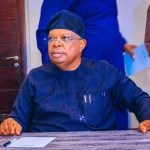
Nigeria’s Vice President, Professor Yemi Osinbajo stated this on Monday in Abuja while declaring open the International Conference on Health Access and Socio-Economic Development beyond Covid-19.
Organized by the Nigerian Institute for Pharmaceutical Research and Development, NIPRD, the three-day conference was tagged as the first multi-sectoral approach to solution-finding.
He said that the Nigerian government owns 49% of the plant, Bio-vaccine Nigeria Limited, which has Prof. Oyewale Tomori as its Chairman, while the balance is held by May and Baker Nigeria PLC.
Prof. Osinbajo added that the company has plans to begin construction of a plant in the first quarter of next year.
According to the Vice President, some South African companies like Aspen Pharmacare and Belvac Institute operate similar facilities.
“So, it is evident that the way forward is more funding for healthcare and research for innovators to develop solutions in pharmaceuticals and medical consumables.”
“And I want to say that after some of the discussion that I held with Dr Adigwe about what to do on how to go about this, I think that I am more than inspired especially regarding not just the potential but exactly how to get the kinds of support that the pharmaceutical industry and especially our research agencies would require.”
Prof. Osinbajo said that the Health Sector Intervention Fund Facility, established by the Nigerian government, has disbursed about N76.9 billion (about $185 million) to finance the acquisition and installation of critical medical care equipment as well as the expansion of production lines in various pharmaceutical companies across the country.
“The CBN is also supporting a number of research and development initiatives in the health sector. In all, I believe the CBN has disbursed a total of N233 billion in grants.”
Prof. Osinbajo highlighted Nigeria’s intervention that reduced the impact of the Covid-19 pandemic in the country from the time the first patient was discovered, which revealed the country’s health capacities.
“A sample of the virus was sent to the African Centre of Excellence for Genomics of infectious diseases at the Redeemers University in Ede in Osun State.”
“There, a team led by Prof. Christian Happi analysed the sample and was able within 48 hours to share the first genome sequence of the severe acute respiratory syndrome, Corona Virus 2 from Africa to the global science community. Few knew that we had that capacity or that the facility existed or had even been recognized internationally before this happened.”
“Second we were able to scale up on testing and case management capacity quickly, activating about 120 laboratories at least as of the end of last year from just five before the pandemic—most of them public laboratories.”
“Also we expanded the footprint of our sovereign public health response capabilities at the sub-national level and in areas where previously such capabilities did not exist at all.”
“One reason why we have been able to manage this pandemic, I believe, better than many expected aside from the providence of the fact that we did not have the expected rate of infections that had been predicted is that we had an existing public health infrastructure to work with.”
“The Ebola outbreak of 2014, and ongoing battle with Lassa fever and our successes with polio eradication helped us to at least tighten our epidemic contingency plans, strengthen our emergency co-ordination and surveillance capabilities and also helped us to invest in public health laboratories.”
“One of the key lessons we learnt, I believe, from our response to the Ebola outbreak was the need to build systems, as they say, in peace time that can be used during outbreaks.”
Vice President Yemi Osinbajo said that the Nigerian Centre for Disease Control, NCDC, which was founded in 2011, was made an independent government agency in 2018.
“This is very crucial because as we prioritized the strengthening of our public health infrastructure in 2018, no one expected that there would be a pandemic in 2020.”
“So as it turned out the NCDC independence is important in its being able to function unrestrained by bureaucracy when the pandemic struck and it was able to attract to a good extent direct funding.”
“With the NCDC’s National Public Health Reference Laboratory in Daduwa in Abuja, a state-of-the-art equipment and well-trained scientists, it is evident to me that the NCDC is one of the best prepared and resourced facilities at least in sub-Saharan Africa.”
Osinbajo said that Nigeria’s local response to the covid-19 pandemic also witnessed the setting up of the Presidential Task Force to co-ordinate the intervention.
He said that the task force, led by the Secretary to the Government of the Federation, “Co-ordinated the national response, set the rules and briefed the nation daily for months, really did a great job because they were then able to swiftly do what is required to at least give the semblance of some order in the way that we approached the pandemic.”
“The task force issued and enforced covid protocols for travel and general movement and when the first doses of vaccines came, the task force developed certain protocols and public health systems used for mass vaccinations deployed across the country so that the very first eligible vaccine candidates received their vaccinations seamlessly.”
The Director-General of the NIPRD, Dr Obi Atigwe noted that at the beginning of the Covid-19 pandemic started in Nigeria there was no solution in sight, except social hygienic measures put in place to curtail its spread.
He said that despite the several interventions developed in the world, there are still several challenges like access to vaccines, vaccine storage administration, apathy and inadequate clinical data and others.
Keynote speaker at the event, Prof. Joseph Fortunak of Howard University, USA, challenged Nigeria and African countries to do more in the production of vaccines.
The conference will have 22 professionals and captains of the industry speaking on various thematic areas and giving different perspectives at the conference.