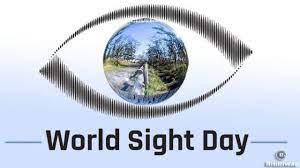
World Sight Day is an annual day of awareness held on the second Thursday of October, to focus global attention on vision impairment, including blindness.
This year, World Sight Day will take place on October 14, 2021 with the theme: Love Your Eyes.
Globally, at least 1 billion people have near or distance vision impairment that could be prevented or has yet to be addressed. Vision impairment affects people of all ages, with the majority being over the age of 50. Vision impairment and blindness can have major and long-lasting effects on all aspects of life, including daily personal activities, interacting with the community, school and work opportunities and the ability to access public services.
The National Advisor, Inclusive Eye Health, Nigeria, Christoffel-Blindenmission (Christian Blind Mission), Dilichukwu Aniemeka, has said that 80 per cent of the one billion people with vision impairment in the world live in Nigeria and other low and middle-income countries.
“CBM recognizes the gap in eye health service delivery in Nigeria, and aligns with the National Eye health policy to develop strategies to strengthen our eye health systems. We are mobilizing resources to improve eye health coverage, make these services affordable and acceptable to the people at a cost that will not cause impoverishment.”
Adding that everyone has a role to play in creating awareness and educating the general public on blindness and visual impairment.
The Minister of Health, Dr Osagie Ehanire announced, at the same event, that the government planned to make comprehensive eye care more accessible to the majority of Nigerians to reduce the burden of blindness which would also impact the economy positively.
He said, “The Federal Ministry of Health aims to achieve this through the integration of Primary Eye Care (PEC) into the Primary Health Care (PHC) in our health system in the country thus reaching out to the underserved in the remote areas of this country. This would also help to improve accessibility of women and the elderly to eye care since they are the most affected.”
The Permanent Secretary, Ministry of Health, Mr Mamuda Mamman, also said that the prevalence of blindness in Nigeria was 0.78%. He identified cataracts, glaucoma, refractive errors, harmful traditional eye practices, and corneal opacities as the leading causes of preventable blindness.
“These preventable blinding conditions can be reduced significantly through public awareness and ease of accessibility to eye care professionals thus encouraging early treatment of the diseases,” he added.
Experts under the aegis of the Nigerian Optometric Association are calling on citizens to take proper care of their eyes, Speaking in Owerri, the Imo State capital, on Wednesday, chairman of the association, Dr Chinaka Nwosu, told journalists that the WSD was set aside to sensitize the general public to the role of eye care services and the importance of maintaining a good vision.